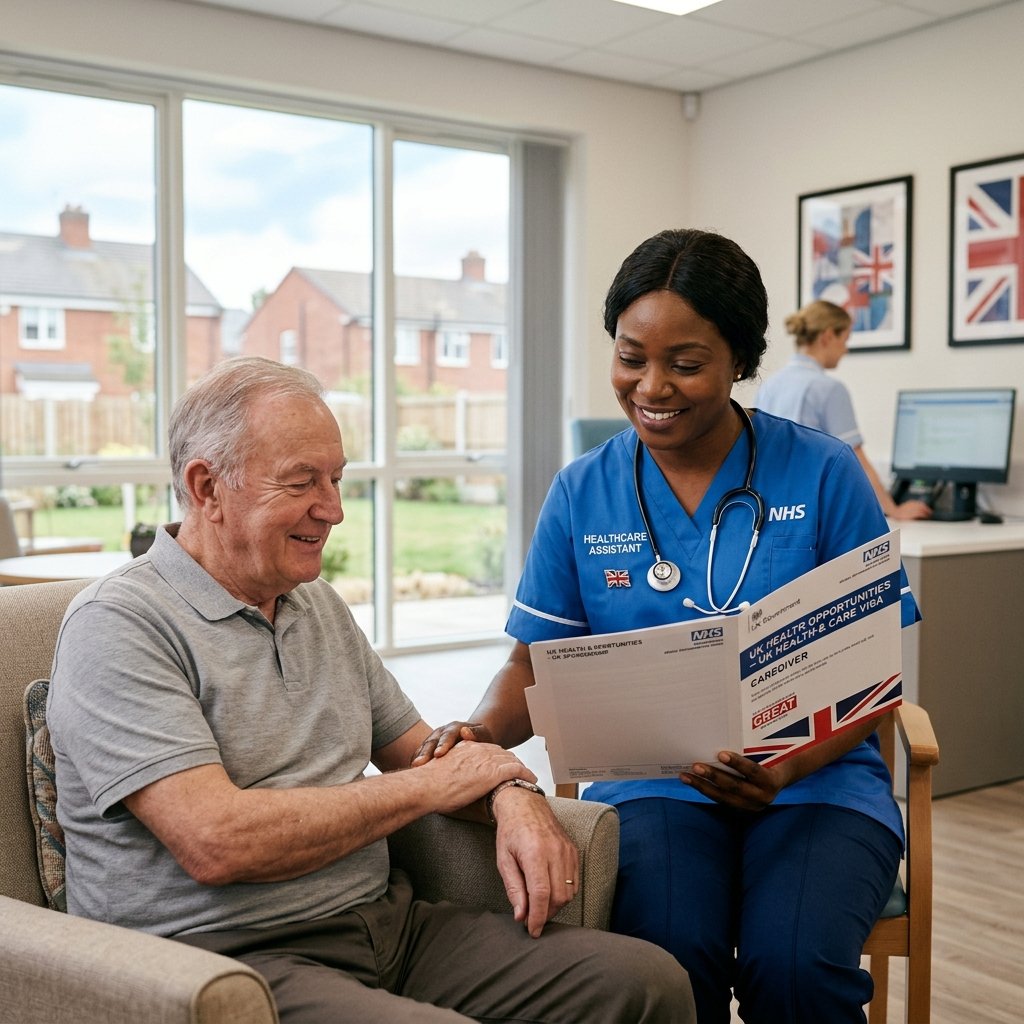
Applying for a UK health and care visa sponsorship in 2026 remains one of the most popular and accessible pathways for global healthcare professionals seeking to relocate to the United Kingdom. Designed to recruit qualified doctors, nurses, allied health professionals, and adult social care workers, this specialized visa route offers several distinct advantages, including exempt visa application fees, fast-track processing times, and a complete exemption from the expensive Immigration Health Surcharge (IHS). As the UK National Health Service (NHS) and private care providers continue to face substantial staffing demands, international recruitment remains a vital component of the UK healthcare delivery model.
⭐ Key Takeaways
- Fee Exemptions: Health and Care Visa applicants and their dependents do not pay the standard visa processing fees or the Immigration Health Surcharge.
- Approved Sponsoring Employers: Job offers must be from an NHS trust, an approved medical practitioner, or a care provider registered with the Care Quality Commission (CQC).
- Minimum Salary Limits: Sponsoring roles must pay at least £23,200 per year or the going rate for the specific occupation code, whichever is higher.
- English Language Requirement: Every applicant must prove their English language proficiency (CEFR Level B1) through a secure, approved test.
Core Eligibility Criteria for the UK Health and Care Visa
To qualify for a Health and Care Worker Visa in 2026, applicants must satisfy several specific criteria set by the UK Home Office. This visa is a sub-category of the Skilled Worker Visa but has its own streamlined requirements.
First, you must hold a valid Certificate of Sponsorship (CoS) from an approved UK employer. Sponsoring employers must be licensed by the Home Office and belong to one of the eligible organizations, which include NHS trusts, NHS foundation trusts, or private social care organizations registered with the CQC in England, or the equivalent regulatory bodies in Scotland, Wales, and Northern Ireland.
Second, the job role must be classified under an eligible standard occupational classification (SOC) code. Eligible roles include doctors, nurses, occupational therapists, paramedics, dental practitioners, care workers, and senior care assistants.
Third, the salary offered must meet the minimum threshold. In 2026, the minimum salary is £23,200 per year or the going rate for your specific occupation code. If your job code has a higher going rate, your employer must pay you that higher amount.
For comprehensive information on the official application process, fees, and rules regarding dependent visa updates, you should visit the official UK Health and Care Worker Visa guide. This portal remains the primary source for official immigration updates.
The English Language and Tuberculosis Test Requirements
Immigration to the UK requires proving your communication and health status before you can travel, ensuring you can integrate safely into the UK healthcare environment.
You must demonstrate English language proficiency at level B1 on the Common European Framework of Reference for Languages (CEFR) scale. This can be proven by passing a Secure English Language Test (SELT) with an approved provider, such as IELTS SELT Consortium, Pearson, or Trinity College London. If you hold a degree that was taught in English and is comparable to a UK bachelor’s degree, you can use an official statement from Ecctis to prove your language skills.
Additionally, if you are applying from a country where tuberculosis is common, you must provide a valid TB test certificate from an approved clinic showing you are clear of the disease. You will also need to provide a criminal record certificate from any country you have lived in for 12 months or more over the past ten years, which is a standard requirement for anyone working with vulnerable adults or children.
Step-by-Step Guide to Applying for the Health and Care Visa
The application process for the Health and Care Visa is completed entirely online, and decisions are typically fast-tracked, taking around three weeks from your biometrics appointment.
Step 1: Secure a Job Offer and CoS. Apply for health or social care roles in the UK. Once you pass interviews, the employer will request a Certificate of Sponsorship for you, which contains details about your role and salary.
Step 2: Prepare Documents. Gather your valid passport, CoS reference number, English language test results, TB test certificate, criminal record checks, and bank statements proving you have at least £1,270 in personal savings to support yourself (unless your employer certifies maintenance on your CoS).
Step 3: Complete the Online Application. Fill out the application form on the UK government visa portal, enter your CoS reference, and upload all required documents.
Step 4: Book Biometrics Appointment. You will be directed to book an appointment at a local visa application center (VFS Global or TLScontact) in your country to submit your passport, fingerprints, and photograph.
Step 5: Travel and Collect BRP. Once approved, you will receive a entry clearance vignette in your passport. After arriving in the UK, collect your Biometric Residence Permit (BRP) card or check your digital status online, and register with a local GP.
CQC Registration and Care Worker Family Restrictions
It is important to note the specific rules surrounding care home vacancies and family immigration. Under current UK regulations, care workers (SOC code 6145) and home carers (SOC code 6146) are no longer permitted to bring dependent family members (spouses and children) with them to the UK. This rule was implemented by the Home Office to control net migration and has led to a major shift in recruitment patterns.
However, this restriction does not apply to senior care assistants, nurses, doctors, or other senior medical staff. Furthermore, your sponsoring employer in England must be actively registered with the Care Quality Commission (CQC) to sponsor care workers. Any offer of sponsorship from a non-registered care agency or private household is invalid under the law. Ensuring your prospective employer meets these CQC requirements is a critical step in verifying the legitimacy of a job offer.
Finding Healthcare and Caregiver Vacancies in the UK
Navigating the UK job market requires using portals specialized in NHS and social care positions.
NHS Jobs (jobs.nhs.uk) is the primary portal for all vacancies within the public health service. For private care home and support worker roles, portals like CV-Library, Totaljobs, and Indeed are useful. When applying to private care providers, always verify that the employer holds a active Sponsor License for Worker/Temporary Worker visas.
Additionally, you can read our detailed guide on the UK Healthcare Receptionist Jobs Guide to find administrative and support opportunities within local clinics and GP practices that may offer sponsorship pathways.
Frequently Asked Questions (FAQ)
Are care workers still eligible for the Health and Care Visa in 2026?
Yes, care workers and home carers are eligible for the Health and Care Visa, provided their employer is CQC-registered and licensed. However, under recent rules, care workers are no longer permitted to bring dependents (spouses and children) with them to the UK under this visa code, although senior care assistants and nurses retain this right.
Do I need to pay the Immigration Health Surcharge (IHS)?
No. One of the main benefits of the Health and Care Worker Visa is that applicants and their dependents are completely exempt from the IHS, which saves thousands of pounds compared to standard Skilled Worker or Student visas.
Can I work a second job while holding a Health and Care Visa?
Yes, you can work up to 20 hours per week in a second job, provided the work is in the same healthcare profession or on the Shortage Occupation List (or immigration salary list). The work must be scheduled outside the hours of your sponsored employment.