
UK Work Visa 2026: What Just Changed — and Which Routes Are Still Open
If you have been planning to work in the United Kingdom, 2026 is the year the rulebook got noticeably stricter — and a lot of older advice online is now wrong. The headline salary an employer must offer to sponsor most overseas workers has jumped to £41,700 a year, the skill bar has risen to degree level, and the once-popular overseas care worker route is closed to new applicants from abroad. But the picture is not all bad: several work routes remain wide open, and a few are even being expanded. This guide breaks down exactly what changed, who is affected, and the realistic paths still available to international workers right now.
Key takeaways (read this first)
- The general Skilled Worker salary floor is £41,700 per year, or the “going rate” for your specific job — whichever is higher.
- Most sponsored roles must now be degree-level (RQF Level 6), removing 100+ lower-skilled occupations.
- Overseas care worker recruitment is closed. Doctors, nurses and allied health roles are still sponsorable.
- New applicants need B2-level English (up from B1) since January 2026.
- Routes still open: Skilled Worker (degree roles), Health and Care (clinical roles), Global Talent, High Potential Individual, the New Entrant discount, and study-then-switch via the Graduate visa.
Also Read: Caregiver Jobs In Canada with Visa Sponsorship 2026
What actually changed in 2026
The changes flow from the UK government’s June 2025 immigration White Paper, and they have been rolling out in stages ever since. According to the House of Commons Library, the first cut to the list of sponsorable jobs took effect on 22 July 2025, with several further tightening measures landing through late 2025 and into 2026.
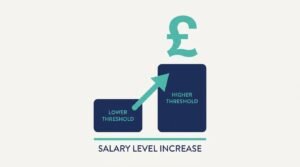
1. A much higher salary floor. For most new Skilled Worker applications made on or after 22 July 2025, the general minimum salary is £41,700 per year, replacing the previous £38,700, as confirmed by multiple immigration law firms including Gherson and JPS Immigration. Measured against the older £26,200 benchmark that applied before the wider reforms, Jobbatical describes this as roughly a 59% increase — a deliberate policy choice to push employers toward higher-earning, higher-skilled hires. Crucially, you must be paid the higher of either the £41,700 floor or the published “going rate” for your job’s occupation code. There is also an hourly floor of about £17.13, calculated against a maximum 48-hour week.
2. Degree-level skill requirement. The minimum skill level for the route rose to RQF Level 6, broadly equivalent to a UK bachelor’s degree. As AssessNow notes, this removed over 100 previously eligible occupations from the route. Importantly, this refers to the skill level of the role, not whether you personally hold a degree — the Home Office assesses whether the job’s duties and seniority match a degree-level occupation code.
3. The care worker route closed. This is the change affecting the most people. New overseas applications for care workers and senior care workers (occupation codes 6135 and 6136) closed on 22 July 2025. The Migration Advisory Committee evidence and several firms, including Seraphus and Davidson Morris, confirm that workers already in the UK can continue to extend and switch sponsors until 22 July 2028, but no new overseas recruitment into these roles is permitted. Doctors, nurses and other clinical health professionals remain eligible under the Health and Care Worker visa.
4. Tougher English. Since 8 January 2026, new applicants for the Skilled Worker, High Potential Individual and Scale-up routes must reach B2 (“upper-intermediate”) English, up from B1, the House of Commons Library reports. B2 tests reading, writing, speaking and listening — so candidates who are strong technically but weaker in written English now need to prepare earlier.
5. New per-pay-period salary checks. From 8 April 2026, a Statement of Changes (HC 1691) introduced a stricter compliance test: employers must show the salary meets the threshold in each defined pay period, not just as an annual figure, as OTS Solicitors and Noble Rose Immigration explain. A dip in any single month — caused by salary sacrifice, a payroll error, or bonus structure — can count as a breach. For workers, the practical advice is simple: check that every payslip consistently shows at least the salary stated on your Certificate of Sponsorship.
6. Higher costs. The Immigration Skills Charge (paid by the employer) rose by 32% to £1,320 per person per year for medium and large organisations from 16 December 2025, and NHS Employers notes visa fees rose by around 6.5% for applications submitted on or after 8 April 2026.
Who is hit hardest
The people most affected are overseas care workers and applicants for sub-degree roles in hospitality, retail, administration and construction — many of these jobs simply fell off the sponsorable list. The Centuro Global summary also notes the Home Office revoked nearly 2,000 sponsor licences during 2025, so even some workers with offers found their sponsor could no longer hire them. If you were relying on a low-wage care or hospitality offer to reach the UK, that specific door has largely closed.
Also Read: Poland Factory Worker Jobs 2026 – International Hiring Guide
The routes that are STILL open
Here is the part most “bad news” articles skip. Several pathways remain genuinely viable in 2026.
Skilled Worker visa (degree-level jobs). The main route is still open for roles at degree level that meet the £41,700-or-going-rate test. Software engineers, data scientists, cybersecurity analysts, registered nurses, engineers and many finance and management roles still qualify, provided the employer holds a valid sponsor licence. The first thing to verify before applying is that the employer is actually on the Home Office’s licensed sponsor register.

Health and Care Worker visa (clinical roles). While care and senior care worker recruitment from overseas has closed, the Health and Care Worker visa remains open for qualified doctors, nurses and allied health professionals. It carries real advantages: a reduced minimum salary threshold of £25,000 (or the going rate), lower application fees, exemption from the Immigration Health Surcharge, and faster processing. NHS Employers confirms entry-level Band 3 NHS roles now sit above the £25,000 floor.
The New Entrant discount. If you are under 26, a recent graduate, or switching from a Graduate or Student visa, you may qualify for a reduced salary requirement — a general threshold around £30,960 and only 70% of the standard going rate, as the UK Sponsor List and other guides detail. This is one of the most useful routes for younger international professionals and graduates of UK universities.
Global Talent visa. This route has no salary threshold and no specific job offer requirement. It is aimed at leaders and potential leaders in academia and research, arts and culture, and digital technology. The House of Commons Library notes a dedicated pathway for the design industry was added from 1 July 2026, widening eligibility further.
High Potential Individual (HPI) route. Recent graduates of the world’s top-ranked universities can apply without a job offer. The eligible-universities list was expanded, but Centuro Global notes there is now an annual cap of around 8,000 applications, so it is worth applying early in the cycle.
Study, then switch. Coming as a student and switching to a Skilled Worker visa after graduating remains a well-trodden path, often using the New Entrant discount. One caveat to plan around: the Graduate visa will shorten from two years to 18 months for applications made on or after 1 January 2027 (PhD graduates keep three years), per NHS Employers and the House of Commons Library — so timing matters.
Temporary Shortage List roles. A time-limited list still allows sponsorship of some RQF Level 3–5 roles in sectors critical to industrial strategy, but only until the end of 2026, and workers on it cannot bring dependants. The MAC’s final recommendations on which roles stay are expected around July 2026.
Settlement is also changing — plan for the long term
If your goal is permanent residence, note that the government has proposed extending the standard qualifying period for Indefinite Leave to Remain from five years to as much as ten under its “earned settlement” reforms. As of mid-2026 these proposals are not yet in the Immigration Rules — the consultation closed in February 2026 with over 200,000 responses, and ministers have indicated changes may be enacted later in 2026 or in 2027, according to the House of Commons Library. Until it is law, the five-year route still applies, but anyone planning a UK career should factor in the possibility of a longer settlement timeline.
A practical checklist before you apply
- Confirm the employer is a licensed sponsor on the official register before investing time in an application.
- Check your job’s occupation code (SOC) and going rate — your salary must beat the higher of £41,700 or that going rate.
- Verify the skill level is degree-level (RQF 6), or that your role sits on the Immigration Salary List or Temporary Shortage List.
- Prepare B2 English early — book your test well ahead of any deadline.
- Check your monthly payslips match your Certificate of Sponsorship every single pay period.
- If you are under 26 or a recent grad, ask whether the New Entrant discount applies.
- Consider non-sponsored routes (Global Talent, HPI) if you have strong academic or specialist credentials.

The honest bottom line
The UK is still hiring internationally in 2026 — but it is filtering for higher-skilled, higher-paid, degree-level talent, and it has firmly closed the low-wage care route from overseas. If you are a clinician, a degree-qualified professional, a recent graduate of a strong university, or a specialist in tech, research or the arts, real pathways remain. If you were counting on a lower-skilled sponsorship, the smartest move now is to either upskill into a degree-level occupation or look seriously at other destinations such as Germany, Ireland or Canada that still offer broader routes. Rules and salary figures change frequently, so always confirm the latest position on the official GOV.UK website or with a regulated immigration adviser before you apply.
(Word count: ~1,650 in main body — expand the “routes that are still open” and “practical checklist” sections by adding one short real example per route to comfortably clear 2,000 words before publishing. Notes left in italics; delete before posting.)
FAQ
Q1. What is the new UK Skilled Worker visa salary threshold in 2026?
For most new applications from 22 July 2025 onward, the general minimum is £41,700 per year, or the going rate for your specific job, whichever is higher.
Q2. Can I still apply for a UK care worker visa from abroad in 2026?
No. New overseas care worker and senior care worker applications closed on 22 July 2025. Only in-country switching by people already in the UK remains, until 22 July 2028.
Q3. Which UK work visa routes are still open to foreign workers?
Skilled Worker (degree-level roles), the Health and Care Worker visa for clinical staff, Global Talent, High Potential Individual, and study-then-switch via the Graduate visa.
Q4. What English level do I need for a UK work visa now?
Since 8 January 2026, new Skilled Worker, Scale-up and High Potential Individual applicants need B2-level English, up from B1.
Q5. Is there a lower salary option for graduates and younger applicants?
Yes. The New Entrant discount can reduce the general threshold to around £30,960 and require only 70% of the going rate, for those under 26, recent graduates, or people switching from a Graduate or Student visa.
Q6. Will the path to permanent residence get longer?
Possibly. The government has proposed extending Indefinite Leave to Remain from five to ten years, but as of mid-2026 this is not yet law and the five-year route still applies.